
Affiliate disclosure: This article contains affiliate links. We may earn a commission if you purchase through them, at no extra cost to you.
Storing water safely for a camping trip comes down to three things: bringing roughly two to three litres per person per day for drinking, using clean food-grade containers, and treating any water you collect on site with a filter, purifier or chemical tablets before drinking it. Getting these basics right is the difference between a comfortable trip and a miserable, or genuinely dangerous, one.
Key takeaways
- Plan on around two to three litres of drinking water per person per day, plus extra for cooking and washing.
- Use clean, food-grade containers and clean them between trips to stop biofilm building up.
- Filtering and purifying are not the same thing: filters remove bacteria and protozoa, purifiers also tackle viruses and pathogens more broadly.
- Never drink untreated water in the UK, even from a crystal-clear upland stream.
- Build redundancy into your kit: carry at least two treatment methods in case one fails or runs out.
How much water to bring camping: a simple calculation
The starting point for how to store water for camping is working out how much you actually need. A litre of water weighs a kilogram, so the total adds up fast on longer trips, as the Opensky Adventure guide to finding and purifying water points out.
A workable daily allowance
- Drinking: two to three litres per person per day in temperate UK conditions; more in hot weather or on strenuous walking days.
- Cooking and hot drinks: roughly one litre per person per day, depending on your menu.
- Washing up and personal hygiene: another one to two litres per person per day if you are car camping or in an RV with no mains connection.
For a family of four on a weekend trip, that can mean carrying 30 to 40 litres or more if there is no reliable refill point. This is why the weight argument matters: if you know fresh water will be available where you are going, you can carry less and treat what you find instead.
Special cases
RVers with onboard tanks need to think about tank capacity, fill points and, importantly, keeping the tank and its pipework clean between trips. Festival-goers usually rely on standpipes, so a smaller refillable container and a backup treatment method are the sensible approach.
Choosing and caring for water containers
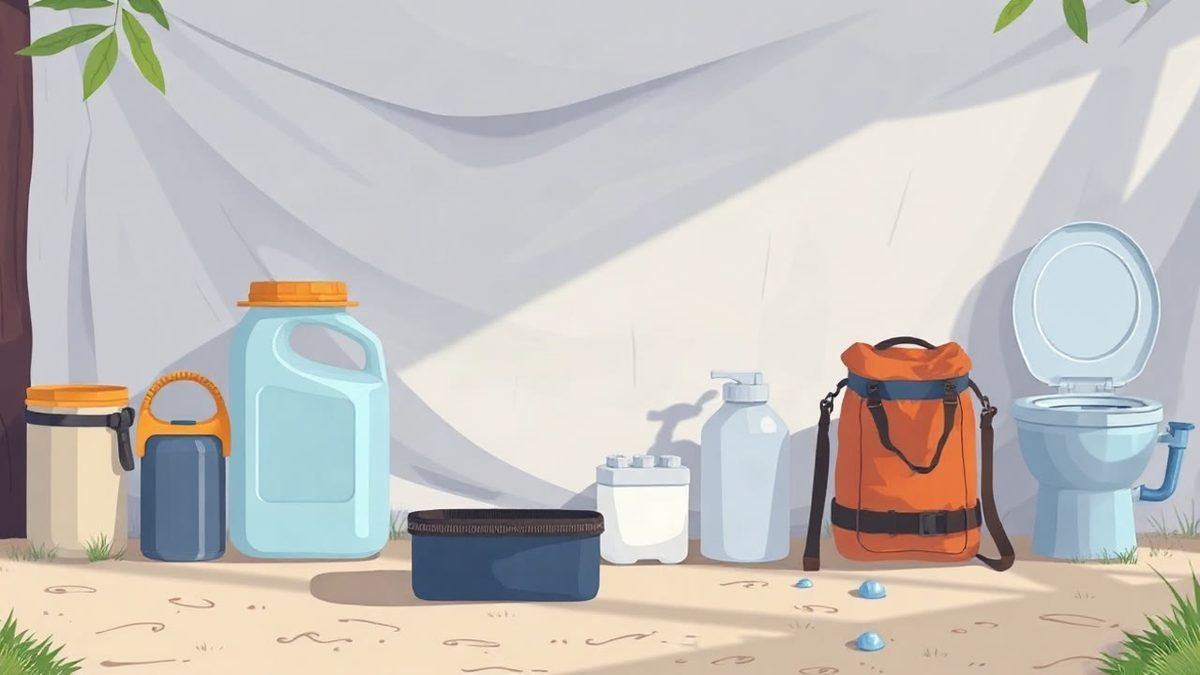
The container matters as much as the water inside it. Use food-grade containers designed for potable water, such as jerrycans marked as suitable for drinking water, collapsible carriers, or rigid tanks for RVs. Repurposed milk jugs and unlabelled plastic bottles are a poor choice because they can taint the water and are difficult to clean properly.
Keeping containers hygienic
Water going stale or tasting odd is almost always a container problem, not a water problem. As Camping with Style explains, purification products such as Puriclean tablets can be dropped into a water container to eradicate harmful bacteria and viruses inside it, and are lightweight enough to pack for any length of trip. The same principle applies at home before you leave:
- Rinse the container with clean water after every trip.
- Periodically treat it with a purification tablet or a dilute sanitising solution, following the product instructions.
- Store containers with the lid off so they dry completely; trapped moisture encourages biofilm and musty smells.
- Keep filling points, taps and funnels as clean as the container itself; a dirty funnel undoes everything else.
Filtering versus purifying: know the difference
These two words get used interchangeably, and the confusion can genuinely make you ill. As the Survival Kit UK field guide on purifying water explains, filtering means physically straining particles and organisms out through a fine barrier. A good pump or squeeze filter removes sediment, bacteria and protozoa such as Giardia and Cryptosporidium, which covers most of what you will encounter in the UK. Purifying goes a step further, killing or neutralising pathogens, including viruses, using heat, chemicals or ultraviolet light.
For UK trips, a filter plus chemical backup is a widely used combination. In regions where waterborne viruses are a bigger concern, or where the only available source is questionable, you should purify as well as filter.
Camping water purification methods compared
There is no single best method: each has trade-offs in weight, speed, cost and what it actually removes.
Boiling
Boiling is the most reliable kill step and needs no special kit beyond a stove and fuel. The downsides are the fuel it consumes and the wait for the water to cool. It does nothing to remove sediment or chemical contamination, so strain cloudy water through a cloth first.
Filters and purifiers
Portable pump, squeeze and gravity filters remove bacteria and protozoa and are fast once set up. Remember the distinction from above: most filtration alone will not address viruses. Match the device to the source water and follow the manufacturer’s guidance on cartridge care.
Chemical treatment
Purification tablets are light, cheap and an excellent backup. Products like Puriclean are designed to eradicate harmful bacteria and viruses from water, according to Camping with Style. The trade-offs are a waiting period before the water is drinkable and a taste some people dislike, which is why many campers carry a small filter for taste and sediment and tablets for the kill step.
UV treatment
Ultraviolet purifiers neutralise pathogens quickly without changing the taste, but they rely on batteries or charging and only work in clear water, since particles shield organisms from the light.
What you are protecting against
The Survivals guide to water purification outdoors lists the main hazards in UK water: Cryptosporidium and Giardia from livestock faeces, E. coli and other bacteria from animal and human waste, and leptospirosis from rat urine, which can be serious. Their golden rule is worth remembering: if you did not purify it, do not drink it.
Where to collect water safely if you need to refill
On longer trips you will often need to top up from natural sources. Choose carefully:
- Best options: rainwater collected directly, and springs emerging from rock, though even these should be purified, per the Survivals guide.
- Reasonable options: fast-flowing mountain streams above the livestock line; lower risk, but not zero.
- Avoid where possible: stagnant lakes and tarns, water downstream of farmland or settlements, and anything near industrial sites or roads.
Opensky Adventure’s advice is practical: use your map to find blue lines and valleys, move upstream of any livestock or farms, and prefer small tributaries over main rivers, which carry everything from upstream. Even high mountain streams are not guaranteed safe, as sheep graze on most UK hills, and contamination upstream of your collection point may be invisible.
Emergency water storage for campers and RVers
Emergency water storage for campers is not just for survivalists. A burst pipe on site, a contaminated standpipe at a festival, or a storm that closes the site shop can all leave you short. sensible reserves include:
- A sealed reserve of drinking water, enough for a couple of days, kept separate from your everyday supply and rotated so it stays fresh.
- A backup treatment method such as purification tablets stored with your first aid kit.
- A rain-catching setup or collapsible container for extended off-grid stays.
For campers and RVers who spend real time off-grid, sourcing water independently becomes the interesting question. Atmospheric water generation, extracting moisture from the air, is one option in this space. The seller of the Water Freedom System markets it as a guide describing a DIY approach to extracting moisture from air; these are the seller’s claims and we have not independently evaluated the product. It suits people who are comfortable with a DIY project and want to research self-sufficiency options; it is not a substitute for carrying treated water on a walking trip, and we could not find independent evidence supporting the seller’s output claims, so treat it as a starting point for further research. Standard purification tablets and filters remain the simpler, cheaper route for most camping trips.
Keeping water safe in the heat: storage and hygiene on site
Once your water is stored, keep it that way. Store containers out of direct sunlight; UV degrades plastic over time and warm water encourages bacterial growth. Keep drinking water separate from water used for washing up, and label them if the containers look similar.
Handwashing and campsite hygiene
Water for hygiene deserves the same planning as drinking water. Always wash hands after using the toilet and before handling food (particularly important when you are sharing a site with many people, such as at a festival), and keep washing-up water well away from natural water sources, since untreated streams can carry contaminants such as Giardia and Cryptosporidium (survival-kit.co.uk).
RV-specific points
RV owners should sanitise the freshwater tank and pipework between trips using an approved tank treatment, drain the tank fully before storage, and never fill from a tap of unknown quality without treating the water afterwards. Check hoses and fittings for mould, and use a food-grade hose rather than a garden hose.
Affiliate recommendation
Mentioned in this article: Water Freedom System: The 2026 Water Converter Breakthrough
Water Freedom System: The 2026 Water Converter Breakthrough is a guide that, according to the seller, explains how to build a device that collects water from the air.
Read the seller’s information →
Affiliate link: we may earn a commission if you purchase, at no extra cost to you. We have not tested this product.
FAQ
How long can stored water be kept for camping?
Water from a clean, treated mains supply, stored in a sanitised food-grade container out of sunlight, is generally fine for several days. If it tastes or smells off, or the container was not properly cleaned, treat it before drinking. Rotate any long-term emergency reserves periodically.
Do I need to purify tap water at UK campsites?
Mains tap water on reputable UK campsites is normally potable. If you are unsure of the source, a standpipe, a private borehole or an RV fill point of unknown provenance, treat it with tablets or a filter as a precaution.
Can I drink from a mountain stream without treatment?
No. Even crystal-clear upland streams in the UK can carry Giardia, Cryptosporidium and the bacteria behind leptospirosis, and livestock graze on most UK hills. Purify first, every time.
What is the lightest purification method for backpacking?
Chemical tablets are the lightest and cheapest, though they need a waiting period and do not remove sediment. A small squeeze filter paired with tablets for backup is the common lightweight combination.
How much water should I store for an emergency at a campsite?
A practical minimum is a sealed two-day reserve of drinking water per person, kept separate from your working supply, plus a backup treatment method. For RVers, factor in tank capacity and know the location of the nearest reliable fill point.
Final thoughts
Safe water on a camping trip is a planning exercise, not luck. Calculate your daily need, carry it in clean food-grade containers, treat anything you collect on site, and keep a backup method in the kit. Do that consistently and water stops being something you worry about on the hill.
If you want to go further into off-grid water independence, start by researching your options carefully. Guides like the Water Freedom System describe one approach to generating water from the air, while filters, tablets and good storage habits remain the foundation of safe camping sanitation for everyone else.