
Affiliate disclosure: This article contains affiliate links. We may earn a commission if you purchase through them, at no extra cost to you.
Emptying an RV or caravan cassette toilet safely means carrying the removable cassette to a designated chemical disposal point (CDP), pouring it slowly into the hopper, rinsing the cassette thoroughly, and never tipping waste into drains, watercourses, hedgerows or ordinary public toilets. Done in that order, the job takes a few minutes and keeps both you and the next user clean and comfortable. This guide walks through the whole routine, UK-style, including what to do when a campsite’s disposal point drains to a septic tank.
Key takeaways
- Only use designated disposal points. Chemical toilet waste must go into a proper chemical disposal point, motorhome service point or (if you’re on mains drainage at home) your own toilet: never roadside drains, rivers or the countryside, where it is antisocial and, near watercourses, illegal (Qualkem Direct).
- Plan disposal around your route. A full cassette can weigh around 20kg, and sloshing waste is hard on the blade seal, so empty little and often rather than hauling a full tank for miles (Qualkem Direct).
- Rinse with the right water. Use the rinse tap at the disposal point, never a drinking water tap, and rinse the hopper after use as a courtesy to the next person (Campercation, Qualkem Direct).
- Match your toilet fluid to the drainage system. On sites whose disposal points drain to septic tanks, common on smaller sites and CLs, a septic-safe treatment is worth considering.
- Gloves and a dedicated cleaning kit make it pleasant. Keep one pair of rubber gloves and a disinfectant just for cassette duty (Campercation).
What a cassette toilet actually is
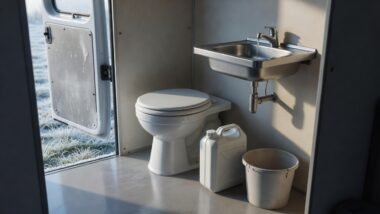
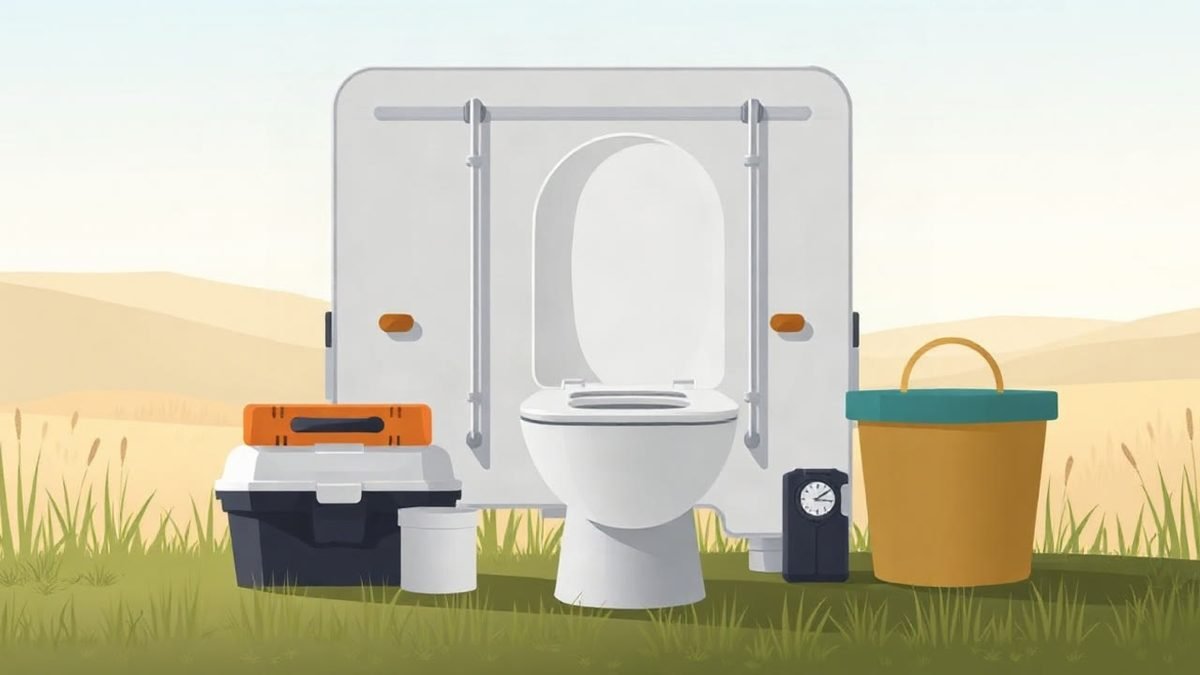
Most caravans, motorhomes and many campervans carry a cassette-style toilet: the bowl sits in the washroom, while the waste collects in a removable tank, the cassette, that slides out through an exterior hatch. That cassette is what you carry to the disposal point, rather than needing to empty a fixed black tank via the vehicle’s own service connection.
A full cassette is heavy, according to Qualkem Direct it can weigh up to 20kg, which is worth bearing in mind when carrying it any distance. The tank has an air release button, which Qualkem Direct recommends pressing while pouring to avoid glugging, and a blade seal between bowl and cassette that needs looking after.
Where can you empty a cassette toilet in the UK?
You have three realistic options, and one hard rule: designated points only.
Campsite chemical disposal points (CDPs)
A chemical disposal point is a dedicated drain, usually a large hopper or gully set into a hardstanding pad, built specifically for emptying portable toilet cassettes. Every Caravan and Motorhome Club and Camping and Caravanning Club site has one, typically with a rinse tap alongside (Qualkem Direct, CampSuite). Experienced tourers often check that a site has a proper CDP before they even book, so it’s a facility worth scouting on smaller sites too.
Motorhome service points en route
A growing number of aires, marinas and some motorway services offer motorhome service points that include cassette disposal. Club directories and public maps, such as the Wildcamping Motorhomes Google My Map covering UK aires, motorhome parking and service points, list locations, but Uncover Britain recommends checking the legend and marker details carefully and confirming access directly with the site before travelling, since some overnight stopovers offer disposal while others provide parking only.
At home
If your home is on mains drainage, Qualkem Direct confirms you can empty your cassette into your own toilet. If you’re not on mains drainage, check your own system’s guidance before emptying a cassette at home; otherwise a campsite chemical disposal point is the safer option.
Where never to empty
Never empty a cassette into a roadside drain, hedgerow, the countryside or a public toilet, and never near watercourses: it’s antisocial and, in the case of watercourses, illegal (Qualkem Direct). Grey water belongs at proper facilities too, not poured onto the ground (Campercation).
How to empty an RV cassette toilet: step by step
- Gather your kit. Dedicated rubber gloves, disinfectant and a cloth or wipes. Keeping one pair of gloves just for waste handling is a tip Campercation highlights for good reason.
- Close the blade and remove the cassette. Shut the slide valve fully, open the exterior hatch and slide the cassette out. Keep it upright.
- Carry it to the CDP. The lid and handle are there for a reason: sloshing waste is unpleasant and a full cassette is genuinely heavy.
- Pour slowly with the air release button pressed. This is the trick most people learn the hard way: venting the cassette as you pour stops the glugging and splashing that happens when air fights to get back in. Pour at a steady, controlled pace into the hopper (Qualkem Direct).
- Rinse the cassette. Use the rinse tap at the disposal point, never a drinking water tap, to swill out the inside of the cassette and empty it into the hopper. Repeat until it runs clean.
- Rinse the disposal point. A quick rinse of the hopper and surrounding area is basic courtesy to the next user (Campercation).
- Recharge the cassette. Add fresh water and a fresh dose of your chosen treatment fluid before slotting the cassette back into the toilet. Done properly, you’ll notice nothing until the next empty.
Keeping it hygienic: gloves, rinsing and etiquette
Hygiene at a disposal point comes down to a short list of habits. Wear gloves every time and treat them as single-purpose. Rinse the cassette thoroughly, as residue left in the tank is what breeds odour later. Clean the spout, seal and exterior of the cassette before it goes back in the van. And leave the CDP as you’d want to find it: rinsed and tidy.
Campercation’s guidelines boil this down neatly: carry gloves and cleaning supplies, rinse after use, and plan where your next disposal point is before your tanks fill up. That last point matters as much for hygiene as convenience, as an overfull cassette is harder to carry, harder to empty cleanly and harder on the seal.
Odour control and septic-safe waste treatment
Odour control starts with three free habits: empty before the cassette is completely full, rinse it properly at every empty, and keep the blade seal clean and lubricated per your toilet manufacturer’s instructions. A well-rinsed cassette with fresh water and an appropriate dose of fluid rarely smells.
Why the drainage system matters when choosing a treatment
Here’s the detail that catches people out: what goes down the CDP hopper eventually has to go somewhere, and on many smaller sites and CLs the campsite’s drains lead to a septic tank rather than mains sewage. Qualkem Direct notes that where a site’s CDP drains to a septic tank, a septic-safe fluid should be used instead of standard toilet chemicals.
Choosing a septic-safe treatment
If you mostly stay on sites with septic drainage, look for a fluid or treatment explicitly labelled septic-safe. Qualkem Direct names options such as 40Shot Green 2-in-1 and the LeisureTime Twin Pack as septic-safe fluid choices for these sites, and your toilet manufacturer will usually list compatible fluids too.
One option that gets marketed in this space is SEPTIFIX, a septic tank treatment sold online. According to the seller, SEPTIFIX is aimed at homeowners with septic systems rather than at chemically treated toilet waste specifically. It’s worth being clear-eyed about that: the seller’s claims describe what the product is intended to do, and independent evidence for any particular outcome isn’t something you can verify from the sales page alone. If your main need is a septic-safe fluid for the cassette itself, a dedicated caravan toilet fluid labelled septic-safe is the more direct solution. If you also own a property with a septic tank and want to explore a bacterial treatment for it, you can find the seller’s details for SEPTIFIX here and judge the claims for yourself. It won’t suit anyone who simply needs standard blue fluid for a mains-drained campsite’s CDP; in that case, any mainstream cassette fluid does the job.
What about the rest of the RV black tank system?
If your vehicle has a fixed black tank rather than (or alongside) a cassette, the same principles apply with a few extras. Empty at a black-waste or chemical-toilet disposal point; Uncover Britain lists cassette disposal, CDP and Elsan point as the terms you’ll see signposted. Never mix black waste into the grey water drain. Keep grey water separate: washing-up and shower water goes to a grey water disposal facility, not onto the ground.
Routine care matters more than any single product. Rinse tanks thoroughly after emptying, keep seals conditioned, and know where your next service point is before you set off. The Wildcamping Motorhomes map and club directories make that planning straightforward, but always confirm access with the site directly rather than relying on a listing alone (Uncover Britain).
Fresh water is the other half of the system. The water you’re adding back into the cassette and flushing with needs to be clean, so it’s worth reading our guide to how to store and purify water for camping trips safely alongside this one.
Affiliate recommendation
Mentioned in this article: SEPTIFIX
SEPTIFIX is a treatment product for household septic tanks.
Read the seller’s information →
Affiliate link: we may earn a commission if you purchase, at no extra cost to you. We have not tested this product.
FAQ
Can I empty a cassette toilet into my toilet at home?
Yes, if your home is on mains drainage; Qualkem Direct lists this as a legitimate option. If your home uses a septic tank, check what your system can handle first; heavy chemical residues are not what a domestic septic tank is designed for, and a local CDP may be the better choice.
How often should I empty the cassette?
Empty whenever it approaches full, and don’t leave waste sitting for long periods between trips. Beyond capacity, the practical limit is weight, a full cassette can weigh around 20kg, and the strain sloshing waste puts on the blade seal if you carry it far (Qualkem Direct).
What’s the trick to pouring without splashing?
Press and hold the cassette’s air release button while you pour slowly. Venting the tank as it empties prevents the glugging and backsplash that happens when air can’t get back in (Qualkem Direct).
Can I use the campsite’s drinking water tap to rinse my cassette?
No. Use the rinse tap provided at the chemical disposal point. Rinsing waste equipment at a drinking water tap risks contaminating the site’s fresh water supply, a strict no-no at every site.
What fluid should I use if the site’s disposal point drains to a septic tank?
Use a septic-safe toilet fluid. Qualkem Direct specifically recommends septic-safe options such as 40Shot Green 2-in-1 or the LeisureTime Twin Pack for sites whose CDP drains to a septic tank, which is common on smaller sites and CLs. If in doubt, ask the site owner, since they know how their drainage works.
Final word
Emptying a cassette toilet is one of those jobs that seems daunting until you’ve done it twice: gloves on, pour slowly with the vent open, rinse with the CDP tap, recharge, and leave the hopper clean for the next person. Build in a septic-safe fluid when your usual sites need one, keep the seals maintained, and the whole system stays quiet and odour-free. And because a clean cassette starts with clean water, it’s worth reading our guide to storing and purifying water for camping before your next trip.