
Affiliate disclosure: This article contains affiliate links. We may earn a commission if you purchase through them, at no extra cost to you.
For most long-stay campers and off-grid site owners, hauling water is the simplest and most reliable option, rainwater harvesting is the best value in wet climates, wells are the long-term answer where drilling is feasible, and water-from-air devices only make sense as a backup in humid conditions. The right choice depends less on technology than on your climate, budget and how much water you actually need each day. This comparison of off-grid water options is designed to help you match a method to your site rather than chase the most heavily advertised one.
Key takeaways
- Hauling is the most reliable off-grid water method and the easiest to start with; its main cost is your time and fuel.
- Rainwater harvesting works well in the UK and other wet climates, but you need storage, filtration and a realistic estimate of roof catchment yield.
- Wells and boreholes are the most durable solution but carry the highest upfront cost and, in the UK, may require consent from the Environment Agency depending on the quantity taken.
- Atmospheric water generation is genuine physics, but output depends heavily on humidity; dry climates produce very little.
- The Water Freedom System is a low-cost DIY guide, not a machine; reviewers note its sales marketing oversells what the finished build can realistically deliver.
How much water do you actually need off grid?
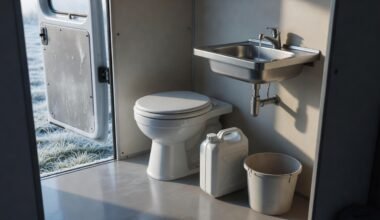
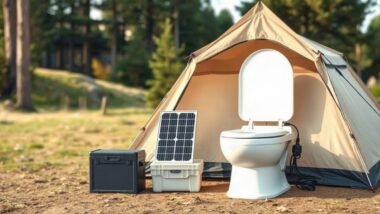
Before comparing sources, work out your real consumption. A frugal camper might manage on 15 to 20 litres per person per day for drinking, cooking and basic washing. Add a flushing toilet or showers and the figure climbs quickly. If you use a portable or camping toilet, water demand is lower than with a flush system, which is one reason cassette and dry toilets are so popular on off-grid sites. Our guide to running a 12V camping toilet off grid covers the power side if you use an electric flush or macerating unit.
Once you have a daily figure, multiply it by the longest gap you are willing to tolerate between resupply or rainfall. That number, not the marketing copy on any product page, determines which of the four methods below can actually support your site.
Option one: hauling water
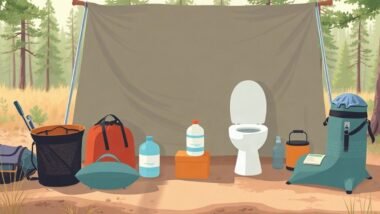
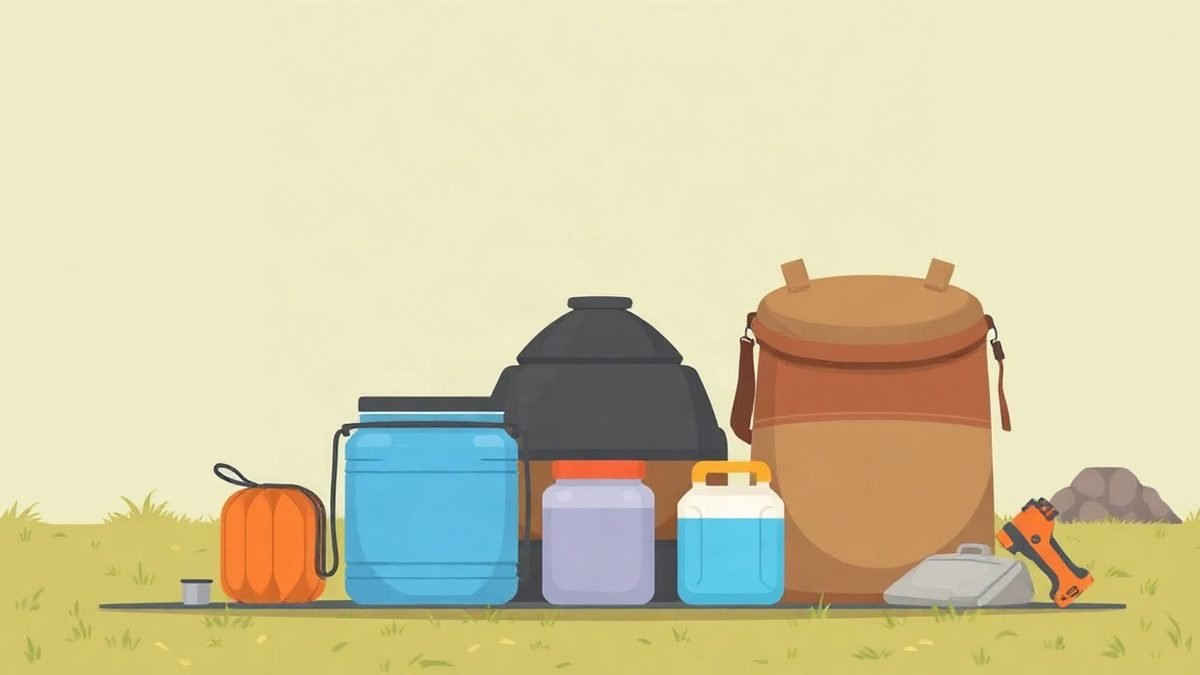
Hauling means collecting water in jerrycans, aquarolls or a bowser and transporting it to your site by vehicle. Most campsites, fuel stations and dedicated filling points make this straightforward, and it requires no equipment beyond containers and something to carry them in.
Strengths and limitations
- Reliable in any climate, including drought, because you are drawing on an existing treated supply.
- Nearly zero setup cost, and the water is usually already potable.
- The downside is labour: every litre must be driven or carried, which becomes tedious beyond a couple of people or a long stay.
- Water quality depends on your containers; use food-grade vessels, clean them regularly and refill from known potable sources.
For weekend and fortnight-long trips, hauling is hard to beat. For permanent off-grid living it becomes a chore that most people eventually supplement with another source.
Option two: rainwater harvesting for campsites
Rainwater harvesting for campsites means catching rainfall from a roof or awning, filtering it and storing it for use. In a country such as the UK, where much of the year brings regular rain, a modest roof area can yield a surprising amount of water: as a rule of thumb, one square metre of catchment collects roughly one litre for every millimetre of rainfall. A 20 square metre roof in a region receiving 1,000 mm of annual rainfall could theoretically gather around 20,000 litres a year, though first-flush losses, evaporation and storage limits reduce that considerably.
What you need to make it work
- A clean catchment surface, ideally a dedicated roof rather than one with bird droppings, moss or bitumen runoff.
- Guttering, a first-flush diverter to discard the dirtiest initial runoff, and sealed storage tanks.
- Treatment before drinking: at minimum a fine filter, and for potable use a purifier or boiling, because rainwater can pick up contaminants from the roof and tank.
Rainwater is excellent for toilet flushing, washing and cleaning with minimal treatment, which stretches your hauled drinking water much further. If you also collect and dispose of wash water on site, read our step-by-step guide on how to dispose of greywater when camping, since greywater handling is the natural companion to any catchment system.
Option three: wells and boreholes
A well or borehole taps groundwater and can supply a site year-round, independent of weather. It is the most durable option but also the most expensive and the most regulated. Drilling costs vary enormously with geology and depth, and in the UK you generally do not need a licence to abstract small quantities (up to 20 cubic metres per day) but you must comply with Environment Agency rules, and private supplies used for drinking must meet private water supply regulations, which typically mean testing and treatment.
Is a well worth it for a campsite?
For a fixed, long-term site such as a smallholding or a permanent campsite, a borehole can be the best investment you make. For seasonal camping, temporary pitches or rental land, it rarely makes sense: you cannot take the well with you, and payback takes years. Treat wells as the endgame for land you own, not a solution for a summer pitch.
Option four: water from air, and what DIY guides like the Water Freedom System actually offer
Atmospheric water generation (AWG) condenses moisture from ambient air, filters it and collects the output. The physics is real, and commercial residential units are sold around the world. The catch is that output scales with humidity: AWG performs well in humid conditions and produces very little in dry ones, and every litre extracted takes a meaningful amount of energy.
What is the Water Freedom System?
The Water Freedom System is not a physical device. According to reviews of the product, it is a digital guide, sold as a PDF on ClickBank at roughly $22, that teaches you to build a small DIY atmospheric water generator from hardware store parts. Build costs are estimated at $50 to $200 depending on what parts you already own, and the purchase is covered by a 60-day money-back guarantee through ClickBank, which reviewers describe as legitimate.
Reviews are consistent on the key points. The Backyard Freedom Lab review stresses that AWG is a legitimate technology and that the question is whether a low-cost DIY guide can translate it into something practical, rather than whether the technology exists. The Hereviews breakdown states plainly that most people will not generate enough water to replace their main supply, that it works best in humid climates, and that commercial AWG units significantly outperform the DIY approach. Everyrated gives the offer 2.6 out of 5 based on the quality of the buyer-facing information it could document, and advises buyers to verify the exact format, price, billing terms, refund policy and support route on the product page before purchasing. The Shelter Insider review concludes that the guide is built on real physics and that the refund policy keeps financial risk low, but that the marketing is aggressive and the production claims describe best-case conditions.
Who a DIY AWG guide suits, and who should skip it
- Potentially suits: hobbyists and preppers in genuinely humid climates who want a low-cost backup or experiment, and who understand that output will be modest. If that describes you, you can check the current Water Freedom System offer and refund terms on ClickBank, and read the documentation carefully before buying.
- Should skip it: anyone in a dry climate, where reviewers note the approach produces almost nothing, and anyone who needs reliable daily drinking water from a single source. Nobody should rely on a first DIY build as their primary supply.
In short: as a weekend project and a tertiary backup, a DIY condensation unit can be an interesting learning exercise. As a headline water solution for a campsite, the evidence does not support the sales pages, and the seller’s marketing claims should be read as best-case scenarios rather than expected results.
Which method fits your climate and budget?
The four options are not rivals so much as layers. Most successful off-grid setups combine two or three of them so that no single point of failure leaves you dry.
Suggested combinations
- Short trips, any climate: hauling only, with a cassette toilet to keep demand low.
- Long stays in the UK or other wet climates: rainwater harvesting for washing and flushing, hauling for drinking water, plus a small backup tank.
- Owned land, long horizon: a borehole as the primary source, rainwater as a supplement, hauling as a fallback.
- Hot and humid regions: the same layers as above, with an AWG unit, commercial or DIY, as a genuine third backup rather than the main plan.
Budget roughly in this order: hauling costs little beyond containers; a basic rainwater setup is a few hundred pounds for tanks, diverter and filtration; a borehole runs into the thousands and needs professional installation; a commercial AWG unit costs more still, which is why DIY guides market themselves as the affordable entry point.
Common mistakes when setting up off-grid water
- Underestimating daily demand, especially once guests arrive or a flush toilet is added.
- Storing rainwater without a first-flush diverter or tank cleaning routine, which turns tanks into contamination sources.
- Assuming a filter makes water safe to drink; filtration and purification are separate steps.
- Buying a water gadget before fixing the boring basics, such as adequate storage and a clean delivery container.
- Forgetting winter: tanks, pipes and pumps all need frost protection, as covered in our guide to winterising a campervan toilet and water system.
Affiliate recommendation
Mentioned in this article: Water Freedom System: The 2026 Water Converter Breakthrough
Water Freedom System: The 2026 Water Converter Breakthrough is a guide that, according to the seller, explains how to build a device that collects water from the air.
Read the seller’s information →
Affiliate link: we may earn a commission if you purchase, at no extra cost to you. We have not tested this product.
FAQ
Is rainwater safe to drink after filtering?
Not automatically. A filter removes particles but not bacteria or viruses. For drinking, rainwater should be boiled, treated with a purifier, or passed through a certified purification system. For toilet flushing, cleaning and washing up with hot water, unfiltered or lightly filtered rainwater is generally fine.
Can an atmospheric water generator replace my water supply?
No. Reviewers of DIY guides such as the Water Freedom System consistently note that output is modest, depends heavily on humidity and works best as a backup. Commercial units perform better but at significant cost and energy use. Treat water-from-air as a supplementary source, not a primary one.
How many litres should I store for a week off grid?
Plan on 15 to 20 litres per person per day for a frugal camping lifestyle, so roughly 105 to 140 litres per person for a week. If you keep drinking water separate from wash and flush water, a 100 to 200 litre storage buffer covers most short stays comfortably.
Do I need permission for a rainwater harvesting system in the UK?
For small-scale rainwater capture from your own roof, no specific licence is generally required, though large commercial installations and any connection to drainage systems should follow building regulations and local rules. If you plan significant abstraction from a river, spring or borehole, check the Environment Agency’s abstraction rules first.
Is the Water Freedom System worth the money?
At around $22 for the PDF, the financial risk is low and the ClickBank 60-day refund policy protects the purchase, according to multiple reviews. The bigger cost is your build time and parts. It is best seen as a cheap experiment for hobbyists in humid climates, not a solution for anyone needing dependable daily water, and independent reviewers score the buyer-facing information middlingly (Everyrated gives it 2.6 out of 5).
Conclusion: start with demand, layer your sources
When off-grid water options are compared honestly, the pattern is clear: hauling is your reliable baseline, rainwater harvesting stretches it cheaply in wet climates, wells reward long-term landowners, and water-from-air belongs at the margins of a plan rather than at its centre. Build the boring infrastructure first, keep a backup layer for every primary source, and be sceptical of any product whose marketing promises more than physics allows. If you want to see what the DIY water-from-air route involves before deciding, the Water Freedom System guide on ClickBank is a low-cost way to review the build instructions, with a 60-day refund window if it does not match your site’s conditions.
Sources
- Water Freedom System: The 2026 Water Converter Breakthrough…
- Water Freedom System Review 2026: DIY Drinking Water From Air?
- Water Freedom System Review (2026): Is It Worth It? | Shelter Insider
- Water Freedom System Reviews: Honest 2026 Breakdown