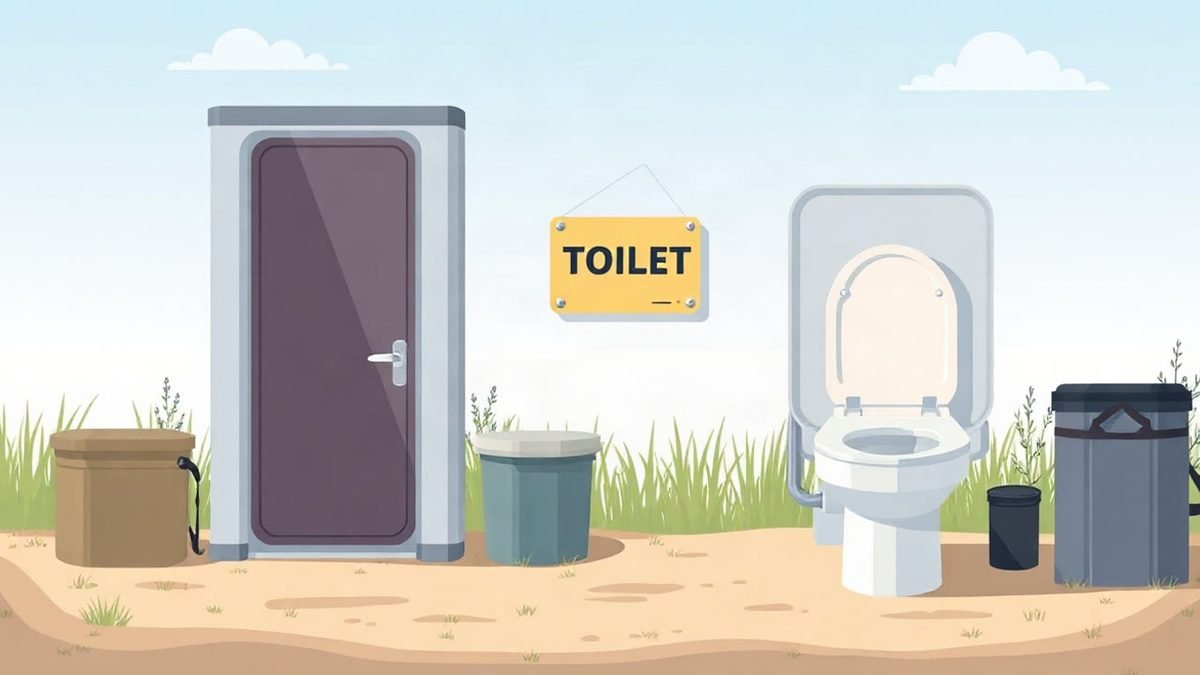

Composting Toilet vs Chemical Toilet: The Short Answer
If you mostly stay on campsites with good facilities, a chemical (cassette) toilet is usually the simpler and cheaper choice. If you spend long periods off-grid, wild camping or boondocking, a composting toilet will give you far greater independence because it needs no dump station, no flush water and no chemicals. As a broad rule, chemical toilets suit weekend and short-trip users, while composting toilets reward extended trips and full-time touring, provided you are willing to manage the waste properly (FarOutRide).
Below is a practical, side-by-side comparison to help you decide which toilet best fits your style of travel.
How Each System Actually Works
Chemical (cassette) toilets
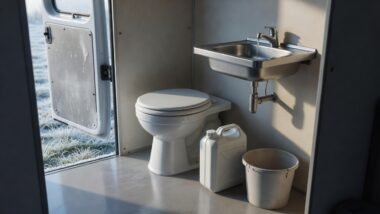
A chemical toilet stores waste in a sealed cassette or holding tank. Toilet chemicals are added to control odour, break down solids and reduce gases until the cassette can be emptied at a suitable disposal point. This is the standard arrangement in most caravans and coachbuilt motorhomes with a fitted washroom (Caravan Motorhome RV). Traditional gravity-flush RV toilets work similarly, using fresh water to carry waste into a black holding tank that is emptied at a dump station (HomeSidekick).
Composting (separating dry) toilets
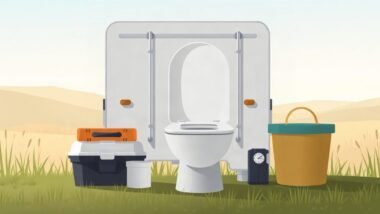
In leisure-vehicle use, a composting toilet is usually a separating dry toilet. It keeps liquid and solid waste apart: solids go into a lined container with a dry covering material such as coconut coir or sawdust, while urine is collected in a separate removable bottle or tank. Because there is no flush water and little or no chemical additive, the system uses far less water and can reduce smells when managed correctly (Caravan Motorhome RV).
Cost: Upfront Price vs Long-Term Running
Chemical toilets have the lower initial cost. Traditional RV toilets are typically less expensive to purchase upfront than composting models (HomeSidekick), and basic portable cassette units are among the cheapest sanitation options for camping.
Composting toilets cost more to buy and install (GOBA). However, the ongoing costs flip the picture. Composting toilets need no chemicals and no flush water, so long-term use can be more cost-effective (GOBA). Your only recurring expenses are covering material (coir or sawdust), liners and occasional spare parts. Chemical toilet owners, by contrast, buy flushing fluid and cassette chemicals continuously, and may also pay for campsite stays purely for disposal access if facilities are scarce.
Bottom line: chemical wins on purchase price; composting tends to win on running costs over years of use.
Maintenance and Emptying: What You’ll Actually Be Doing
Chemical toilets are familiar and easy to use, but the cassette fills quickly, largely with urine, and needs frequent emptying at an Elsan point or dump station. That is straightforward when facilities are plentiful, but it becomes a genuine problem where they are not. On the Great Ouse river system, for example, limited Elsan disposal facilities have made emptying chemical toilets an increasing issue for boaters (GOBA).
Composting toilets ask more of the owner day to day, but in a different way. You add covering material after each solid use, and you empty the urine bottle regularly. As a realistic planning figure for two people using a composting toilet full-time, expect to empty liquids every 2–3 days and solids every 2–3 weeks, depending on the model (FarOutRide). More users means more frequent emptying regardless of type.
Bottom line: chemical toilets mean more frequent trips to a disposal point; composting toilets mean small, frequent urine emptying and rare solids handling, but they require regular attention and some learning. Honest self-assessment of how hands-on you are willing to be will save a lot of frustration later (FarOutRide).
Odour Control: Which Smells Worse?
Both systems can be odour-free when managed well, and both can smell when neglected.
- Chemical toilets rely on additives to suppress odour between emptyings. A well-sealed cassette with fresh chemicals is effective; a cassette left too long is not.
- Composting toilets rely on separation and ventilation. Many modern composting toilets include ventilation systems that effectively manage odours (GOBA), and keeping urine and solids apart is the key to staying smell-free; mixing the two is what creates the worst odours in any system.
Correctly managed, a separating toilet can actually reduce smells compared with a mixed-waste cassette (Caravan Motorhome RV). The trade-off is that management is on you, not on a bottle of chemicals.
Off-Grid Suitability: Independence vs Infrastructure
This is where the two systems diverge most sharply.
- Chemical toilets chain you to disposal infrastructure. If most of your nights are at campgrounds with dump stations, a cassette toilet is perfectly practical (FarOutRide). But wild camping, festivals without Elsan points and long river or coastal moorings all make chemical emptying harder, and dumping a chemical cassette anywhere other than a designated disposal point is unacceptable.
- Composting toilets need no dump station, ever (FarOutRide). Urine can typically be disposed of responsibly away from watercourses (check local rules), and solids can be bagged and composted later. This makes them the better fit for boondocking for days or weeks at a time (FarOutRide) and a genuine alternative for residential boats where composting facilities are available (GOBA).
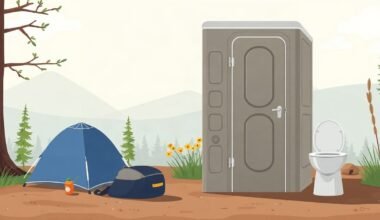
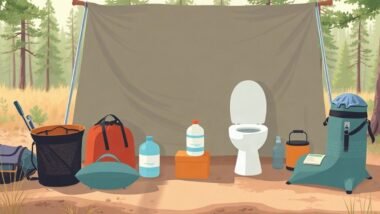
For festival-goers and campers without a vehicle-based washroom, a portable separating toilet offers the same independence benefit: no chemical disposal points required.
Space, Weight and Practical Considerations
Measure before you buy: composting toilets vary significantly in footprint (FarOutRide). Compact models are built specifically for tight spaces, but composting units as a class tend to be larger and bulkier than comparable cassettes (GOBA), and the ventilation requirement adds a fitting consideration in fixed installations.
Chemical cassettes are compact, standardised and easy to carry to a disposal point. On the other hand, they require you to carry water for flushing and stock up on chemicals, which adds weight and shopping logistics to every trip.
Environmental credentials also differ. Composting toilets eliminate the need for chemicals and water, making them a more environmentally sustainable option, and solid waste can be composted and repurposed for non-edible plants (GOBA). Chemical toilet fluids must be disposed of only at proper facilities, and the environmental case for them is weaker.
Which Toilet Should You Buy?
Use your touring style, available space, access to facilities and willingness to manage waste as the deciding factors (Caravan Motorhome RV). In practice:
- Choose a chemical cassette toilet if: you take weekend or occasional trips, almost always stay on sites with Elsan points or dump stations, want the simplest, most familiar option, and prefer the lowest upfront cost (FarOutRide; HomeSidekick).
- Choose a composting toilet if: you take extended trips or live on the road, regularly boondock, wild camp or attend festivals with no disposal points, want to cut water and chemical use, and are comfortable with the routine of adding cover material and emptying urine every couple of days (FarOutRide; GOBA).
- Choose based on space and headcount: more people means more frequent emptying whatever you buy, so size the urine capacity accordingly; if space is tight, check the footprint of compact composting models carefully before committing (FarOutRide).
FAQ
Do composting toilets really not smell?
When managed correctly, no; separating urine from solids and using a ventilation fan keeps odours under control, and modern composting toilets are designed to manage smells effectively (GOBA). Problems arise only when liquids and solids mix or when covering material is not used.
How often do you empty a composting toilet?
For two people using one full-time, plan on emptying the liquids container every 2–3 days and the solids container every 2–3 weeks, depending on the model (FarOutRide). More users means more frequent emptying.
Is a chemical toilet cheaper than a composting toilet?
Yes, upfront. Traditional chemical and gravity-flush RV toilets are typically less expensive to purchase than composting toilets (HomeSidekick). However, composting toilets can be more cost-effective long term because no chemicals or water are needed (GOBA).
Can you use a composting toilet on a campsite?
Yes. Most campsites accept them, and urine can usually be emptied into normal toilet facilities. Check individual site rules if you are unsure, particularly regarding solids disposal.
What is the main downside of a composting toilet?
The combination of higher initial cost, bulkier size (GOBA) and the hands-on routine it demands. Composting toilets require some learning and regular maintenance, so an honest assessment of your willingness to manage waste matters (FarOutRide).
Conclusion
There is no universal “best toilet for RV camping”, only the best toilet for your trips. A chemical cassette toilet remains the simplest, most familiar and cheapest-to-buy option for campsite-based touring (Caravan Motorhome RV). A composting toilet trades a higher purchase price and a small daily routine for genuine off-grid independence, lower running costs and a lighter environmental footprint (GOBA; FarOutRide). Match the system to how and where you actually travel, measure your space before buying, and either choice will serve you well.
Sources
- Pros and Cons of Chemical and Composting Toilets – GOBA
- RV Toilet Showdown: Compost vs. Traditional
- Campervan Toilet Guide: Every Type Compared (And What We Use) – FarOutRide
Environmental Impact: Chemicals vs Composting
Chemical toilets rely on additive fluids to control odour, break down solids and reduce gases in the waste tank until the cassette can be emptied. These chemicals must then be emptied into a dump station or toilet, and disposal facilities can be limited in some areas.
Composting toilets avoid fluid additives altogether. Solid waste is separated from liquid and combined with a carbon material such as coco coir or peat moss, allowing aerobic decomposition rather than chemical suppression. Composting toilets avoid fluid additives altogether, and solid waste can be composted and repurposed for non-edible plants where local rules allow; always check the regulations where you travel. For travellers who want to minimise their chemical footprint, this is one of the composting toilet’s clearest advantages, though it does depend on you maintaining the right moisture and carbon balance for the composting process to work properly.
Power Requirements: Another Factor to Budget For
Many composting toilets include a small 12V fan to vent moisture and odours out of the unit. This draws minimal power, but it does mean you need a battery or solar setup, which matters for tent campers with no electrical system at all. Some models can run without the fan, though odour control will suffer. Chemical toilets, by contrast, need no power whatsoever, which keeps them the more forgiving option for simple, low-tech setups. If your vehicle already has a leisure battery and ventilation, the fan is a non-issue; if you are running a tent or a basic campervan conversion, factor that in before you buy.