
Affiliate disclosure: This article contains affiliate links. We may earn a commission if you purchase through them, at no extra cost to you.
Key takeaways
- An off-grid water supply camping plan rests on four pillars: knowing your daily consumption, carrying enough storage, mapping refill points, and having a backup source such as rainwater or an atmospheric water generator DIY build.
- Most campers use far more water than they expect once cooking, washing up and handwashing are included, so budget generously rather than optimistically.
- Any water from an untreated source, including condensate from a homemade device, should be filtered and disinfected before drinking.
- AWG output depends heavily on humidity and temperature; warm, humid conditions produce far more water than cool, dry ones, and no figure should be treated as a guaranteed daily result (Off Grid Water Lab).
- Pair your water plan with a sanitation plan: greywater disposal and a handwashing station keep your camp hygienic with limited supply.
A reliable off-grid water supply for dry camping comes down to planning four things before you leave home: how much water your group actually needs each day, how much you can carry or store, where you can refill (mains taps, fill points or filtered natural sources), and what backup you will use if those run out, such as rainwater collection or a DIY atmospheric water generator. Get those four answers down on paper and a campsite without taps stops being a problem and becomes simple logistics. This guide walks through each step in order, including the DIY options and their honest limitations.
How much water do you actually need when dry camping?
The most common planning mistake is budgeting only for drinking water. Drinking is a small fraction of real consumption once you add cooking, hot drinks, washing up, handwashing, brushing teeth and basic personal hygiene. A sensible starting point for planning purposes is to allocate roughly two to three litres per person per day for drinking and cooking in temperate conditions, more in hot weather or with strenuous activity, and then add a separate allowance for cleaning and hygiene.
Write the numbers down for your specific group. Two adults cooking proper meals and washing up at camp will use noticeably more than two adults eating ready meals and using a campsite shower block elsewhere. Your off-grid water supply camping plan should be built around your own figures, not a generic average.
Ways to reduce demand before increasing supply
- Cook one-pot meals to cut washing up water dramatically.
- Use a spray bottle and a basin for washing up rather than running water.
- Set up a dedicated handwashing station with a low-flow tap; our guide to setting up an off-grid handwashing station for camping covers the details.
- Clean teeth using a cup of water instead of letting a tap run, which saves water.
- Ration shower bags or use wet wipes on short trips.
Every litre you do not need to find is a litre you do not need to carry, filter or generate. Efficiency is always cheaper than supply.
What are the main dry camping water sources?
Dry camping water sources fall into five practical categories. A robust plan usually combines two or three of them rather than relying on a single option.
1. Carried water and storage containers
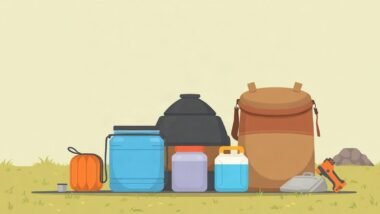
For trips of a few nights, simply carrying the water you need in jerry cans, collapsible cubes or an onboard tank is the simplest and most dependable approach. Food-grade containers only, and fill them at home where you know the water is treated. The limits are weight (one litre is one kilogram) and vehicle space.
2. Mains refills and fill points
Some campsites, fuel stations and other facilities offer potable water refill points, though policies differ and access is not guaranteed. Apps and campsite directories list potable water fill points for RVers and motorhomers. Map at least two refill options within reach of your camp before you set off, and carry a short length of food-safe hose plus tap adapters, because fittings vary widely.
3. Rainwater harvesting
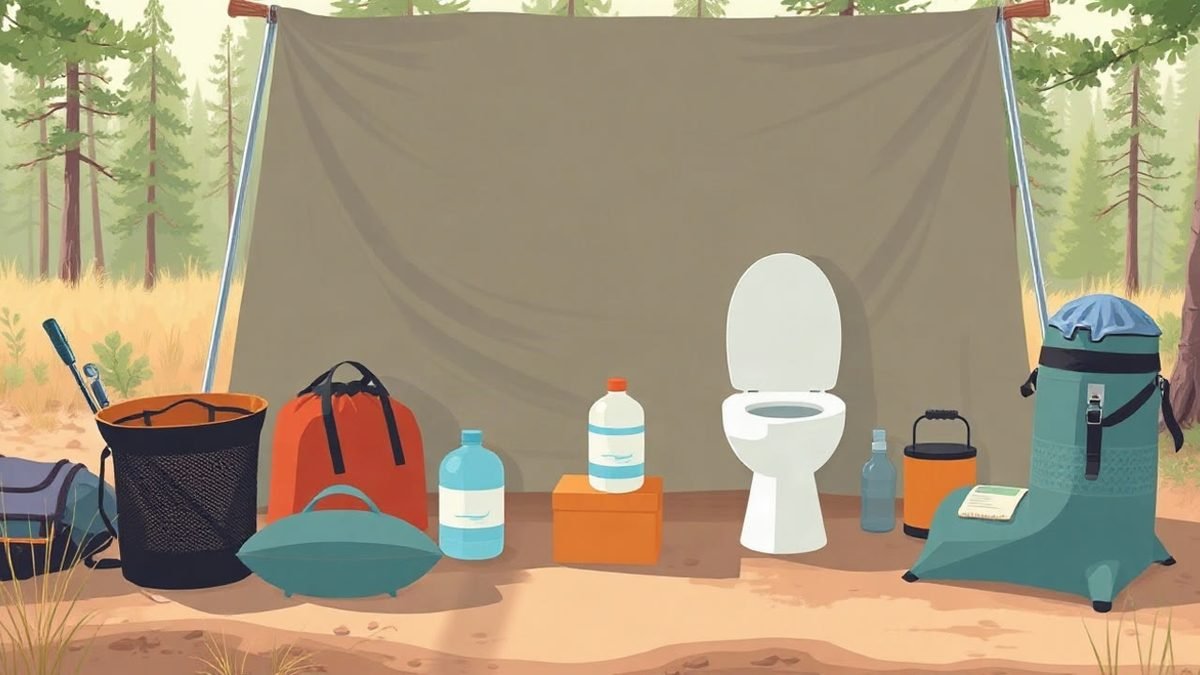
In the UK and much of northern Europe, rain is a genuinely useful backup. A tarp pitched as a funnel into a clean bucket or collapsible tank can collect meaningful volumes during a decent shower, and vehicle-mounted collection from an awning or roof works too. Rainwater should always be filtered and disinfected before drinking because it picks up debris, bird droppings and roof residues on the way down. For washing up and flushing, it is immediately useful with minimal treatment.
4. Natural surface water (with treatment)
Streams, lakes and rivers can supplement supply for washing, and can be made safer for drinking with proper filtration and disinfection (more on that below). Never draw drinking water from a source directly beside a path, livestock field or camp washing area, and always collect from the clearest, fastest-moving water available.
5. Air-sourced water: atmospheric water generators
The newest option for many campers is extracting moisture from the air itself, either with a commercial unit or a DIY build. This is the most technical and power-hungry option, so it deserves its own section.
Can you really make water from air when camping?
Yes, but with honest caveats. An atmospheric water generator (AWG) works by moving air across a cooled surface; when that surface is below the air’s dew point, water vapour condenses into droplets that can be collected, filtered and stored. This is the same physics as water forming on a cold drink on a humid day, and the National Weather Service’s explanation of dew point (cited by LifeTranq) describes the underlying process.
Three practical limitations matter for campers:
- Humidity. Warm, humid air contains far more recoverable moisture than cool, dry air. EPA research notes that output depends strongly on air temperature and water-vapor content, and a best-case output figure should not be treated as a guaranteed daily result everywhere (Off Grid Water Lab).
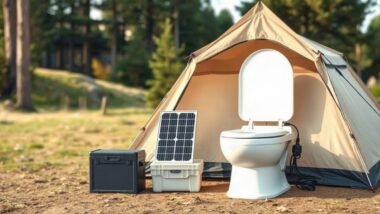
- Power. A refrigeration-based AWG needs a compressor running for hours, so you need a battery bank, generator or mains hookup to run one. Size your power system alongside your water system.
- Treatment. Condensate is essentially distilled water that has passed over surfaces; it should be filtered and disinfected before drinking.
What does a DIY atmospheric water generator involve?
A DIY atmospheric water generator is a home-built unit that cools humid air below its dew point, collects the condensate and treats it before storage. According to the Water Independence Hub build guide, a typical design uses a hermetic compressor, an evaporator coil, a condenser, a food-grade collection tank and a three-stage filtration stack of sediment, activated carbon and UV. The build takes around 12 to 20 hours for a methodical first-time builder, with parts budgeted at roughly $150 to $400, plus $50 to $100 if you need basic tools; the same source estimates all-in costs of $250 to $450 for a first build and output of a quarter gallon to just over a gallon per day at 50% relative humidity or above, with 60 to 80% RH described as the optimal range.
Treat those figures as one builder’s estimates rather than promises. As Off Grid Water Lab emphasises, output varies hugely with climate, and any headline litres-per-day number should be read with caution.
Is a DIY AWG right for your camp setup?
A home-built condensation unit suits campers and RVers who already have a serious power system, stay in humid climates for extended periods, and enjoy mechanical projects. It does not suit weekend campers in dry conditions, anyone without spare power capacity, or those who just want water with no maintenance burden. For most short trips, carried water plus mapped refill points remains simpler, cheaper and more dependable.
If you do want to attempt the build, the seller of the Joseph’s Well DIY atmospheric water generator guide markets it as an ebook and video course covering the construction process. According to the seller, it provides step-by-step plans for a refrigeration-based unit; note that the seller’s marketing includes conflicting output figures, so do not treat any yield number as a promise, and remember that any such device needs power and sufficiently humid air to work. If you prefer to research first, a detailed DIY atmospheric water generator step-by-step build guide is also freely available and covers components, budget and safety checkpoints.
How do you store water safely at camp?
Storage is where many water plans quietly fail. Water that was clean when filled can become unsafe through poor containers or careless handling.
- Use food-grade containers only; avoid repurposed chemical or milk containers that retain residues.
- Clean and sanitise tanks and containers regularly, and never let water sit in direct sunlight in clear containers for long periods, which encourages algae.
- Keep filling equipment (hoses, funnels) dedicated to water only and stored in a clean bag.
- Label drinking water containers separately from washing and greywater containers so nobody confuses them at the end of a long day.
- Store in shade where possible and use smaller containers for daily use, keeping the bulk reserve sealed.
If your setup includes a 12V pump or a 12V camping toilet with a flush, remember those draw on your supply too; our guide on running a 12V camping toilet off-grid explains the power side of that equation.
How do you treat water from unfamiliar sources?
Any water that has not come from a treated mains supply should be treated before drinking. That includes rainwater, surface water and condensate from a homemade AWG. The standard approach is a two-step process:
- Filter first. A sediment filter removes particles, and an activated carbon stage improves taste and removes many chemical contaminants. A dedicated backpacking filter rated for bacteria and protozoa is the practical choice at camp scale.
- Disinfect second. Boiling is the most reliable method; UV treatment works in DIY stacks (as specified in the Water Independence Hub design) provided the water is already clear. Chemical tablets are a lightweight backup.
The Water Independence Hub build guide includes an important safety checkpoint that applies to any condensation or collection system: always flush roughly a gallon of water through a new filtration stack and discard it before drinking the output. Residues from manufacture, glue and storage need clearing first.
How do you build a complete off-grid water plan, step by step?
- Calculate demand. People, days, climate, cooking style. Add 25% as a buffer.
- Choose primary supply. Carried water and mapped mains refill points cover most trips.
- Choose a backup. Rainwater collection for humid climates, surface water plus filtration for wild country, or an AWG for long humid-climate stays with power to spare.
- Size storage. Enough sealed reserve to cover at least one failed refill plus daily-use containers.
- Sort treatment. Filter plus disinfection for anything untreated; flush new filter stacks before use.
- Plan the waste side. Know in advance how you will handle greywater; see our guide on disposing of greywater when camping.
- Rehearse at home. Assemble, fill and use the whole system in the garden before relying on it somewhere remote.
Affiliate recommendation
Mentioned in this article: Joseph’s Well
Joseph’s Well is a DIY guide that, according to the seller, explains how to build a device that collects water from the air. It is instructions, not a ready-made machine.
Read the seller’s information →
Affiliate link: we may earn a commission if you purchase, at no extra cost to you. We have not tested this product.
FAQ
How much water should I carry for a weekend of dry camping?
Plan your own figures rather than copying averages: drinking and cooking water of roughly two to three litres per person per day in temperate conditions, plus an allowance for washing up and hygiene, plus a 25% buffer. For a couple over two nights, that typically means carrying at least 15 to 20 litres or arranging a refill.
Is rainwater safe to drink at camp?
Not without treatment. Rain picks up debris, bird droppings and surface residues as it runs off. Filter it and disinfect it (boil, UV or chemical tablets) before drinking; it is fine for washing up with minimal treatment.
Do DIY atmospheric water generators actually work?
The physics is sound: cooling humid air below its dew point condenses water vapour, which is a well-documented process (LifeTranq; Off Grid Water Lab). The practical constraints are humidity, power consumption and modest output, and no output figure can be guaranteed across all climates. Treat condensate as untreated water until filtered and disinfected.
What is the cheapest backup water source for a dry campsite?
A tarp rigged as a rain funnel into a clean container costs almost nothing and works well in the UK climate for washing water. For drinking backup, chemical purification tablets plus a basic filter are the low-cost route.
Do I need special insurance or permission to collect rainwater in the UK?
Small-scale rainwater collection for personal camping use is not a licensing concern in the UK. The practical rules are hygiene ones: clean collection surfaces, food-grade storage and treatment before drinking.
Final thoughts
A dependable off-grid water supply camping setup is mostly arithmetic and habit: count your litres, map your refills, keep a treated backup and store everything in clean, food-grade containers. Carry and refill as your primary strategy, keep rainwater or filtration as your fallback, and only take on a DIY atmospheric water generator if you have the power, the climate and the patience to support it. Once the water side is sorted, sort the waste side next: a greywater plan and a handwashing station complete a genuinely self-sufficient camp.