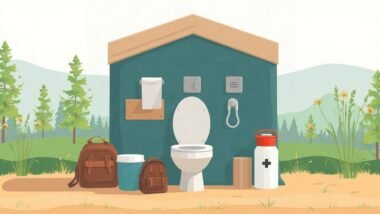
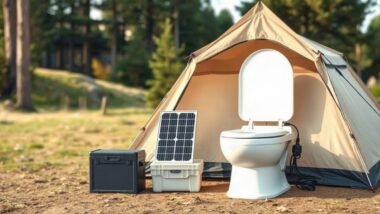
Short answer: Winterising a campervan toilet and water system means removing plain water from the cassette, bowl, fresh tank, grey tank, pump, taps and boiler, then protecting seals and traps you cannot fully dry. If you still use the van in frost, either keep the inside above freezing or drain the system before the van is left cold. Follow the vehicle and appliance manuals. Use only non-toxic plumbing antifreeze labelled for drinking-water systems.
In this guide
- Why frost damages toilets and pipework
- Before you open a drain
- Winterise the campervan toilet
- Drain the fresh water system
- Drain grey water
- Protect the pump and boiler
- Choose a safe antifreeze
- Using the van when it freezes
- Winterising checklist
- Bring the system back in spring
- Where waste should go
- FAQ
- Sources
Why frost damages toilets and pipework
Ice takes up more room than the water it came from, by roughly nine per cent. In a closed pipe, pump head or toilet valve that expansion splits plastic, tears seals and cracks fittings. You often find the damage later, as a drip on the first warm trip.
A campervan system is spread out. The tank may sit in a locker, the pump under a seat, the boiler in a cupboard, and the waste pipes in the outside air under the floor. The living area can feel fine while a pipe in that draught is already frozen. A mild afternoon does not rule out a freezing night. One night below freezing is enough when water is trapped at a closed tap or in a non-return valve.
Before you open a drain
Read the water, toilet and heater sections of your manuals before you open a drain. Valve order is not the same on every van. Park level so a tank does not hold a puddle in one corner. Switch the pump off. Switch the water heater off and let it cool until the pipes are only lukewarm. Never open a drain on a hot, pressurised heater.
Gas appliances should be serviced by a qualified engineer. Draining the system is not a reason to open burners, jets or flues. If you smell gas, stop and get the system checked before you travel.
Take a bucket, gloves, towels and a torch. Buy non-toxic antifreeze made for drinking-water systems, often sold as RV or plumbing antifreeze. The label states how cold that bottle protects to. Do not dilute it unless the label says so. Do not use car antifreeze, screenwash, salt, cooking oil or spirits.
Winterise the campervan toilet
To winterise a campervan toilet, empty the cassette at a chemical toilet disposal point. On UK sites this is often called an Elsan point. A part-full cassette can split in a freeze, and the waste will thaw onto the ground under the van. Rinse with clean water and empty that rinse water at the same point.
Rinse the bowl. Set the blade or slide valve to the storage position in the toilet manual, and use the seal lubricant that manual names. A dry seal can stick or crack. If no product is named, wipe a film of non-toxic plumbing antifreeze on the seal rather than a kitchen oil.
Put a small amount of the same antifreeze in the bowl, enough to wet the valve and any trap. Toilet chemical is not a substitute. It is there to control odour and break down waste, not to stop ice, and an unplanned mix can harm seals.
If you remove the cassette, store it empty and clean, with caps on so the seals are not crushed. Drain an electric flush pump and its hose too, or they stay full after the bowl looks empty.
For a portable loo kept in the warm area on short winter trips, see the Camco 5.3 Gallon Portable Toilet Review: Is It Worth It?
Drain the fresh water system
Open the fresh drain and run the tank until it stops. Open the kitchen tap, bathroom tap, shower and outside shower. Put mixer taps in the middle so hot and cold both empty.
Run the pump only for a few seconds to push out the last water, then switch it off. Stay beside it. A diaphragm pump left running dry can overheat.
Empty the inline filter, and check the non-return valve, any accumulator and any low loop under the sink. A filter bowl left full is a frequent freeze crack. Refit it empty if the manual lets you remove it.
Bypass the water heater before antifreeze goes in, if the heater manual says to. Pump antifreeze until the colour at every outlet matches the bottle, then switch the pump off. A pale colour means plain water is still in that run, so the pipe is less protected than the label suggests.
Drain grey water
Drain the grey tank at a campsite waste point or a motorhome service point. It is soapy and may hold food scraps. Do not tip it into a hedge, a kerb gully or a field drain.
For storage you can leave the grey valve open so a later drip runs out. Mesh the outlet if insects are a worry, and do not tape a vent shut.
A 12-volt tank pad helps on nights you are using the van. It does nothing once the leisure battery is flat, so it is not a storage plan for an unplugged driveway.
Protect the pump and boiler
Leave the pump off once it is drained or filled with non-toxic antifreeze. If the head has a drain screw, use it as described and refit it before next season.
Cool the boiler or water heater fully, then open the frost drain the manual names. Wait until the flow stops. If the unit still feels heavy, it is probably not empty.
Bypass the heater if antifreeze is not allowed inside it. Do not fire a drained heater unless the manual describes a frost programme made for that. Some combi boilers start themselves as the temperature nears freezing, but only while 12-volt power and the gas or mains supply they need are present. For storage, a drained heater does not depend on a battery staying charged.
Burner work, flue checks and gas joints are jobs for a qualified engineer. If the heater has already frozen, have it checked before you use it.
You can clear some pipe runs with low-pressure air, but stay at or below the pressure your vehicle maker states. If no figure is given, do not guess. Antifreeze is the safer method when you are unsure.
Choose a safe antifreeze
Use propylene glycol antifreeze sold for drinking-water systems in caravans, motorhomes and boats, and labelled non-toxic. Non-toxic does not mean drinkable. Flush before you cook or fill a kettle. Check the temperature printed on that bottle, because products are not all the same.
Ethylene glycol, the type in car radiators, is poisonous. It must never enter this system. Screenwash must not either. Do not water the proper product down in the tank. You want the bottle colour, undiluted, at the furthest tap. Keep it out of the boiler unless that manual allows it. Store the bottle capped and upright, away from children and pets.
Using the van when it freezes
Living aboard in frost is not the same as storing the van. Equipment inside a living space that stays above freezing is usually safe. Underslung tanks, outside showers, chassis waste pipes and cold lockers freeze first.
If the system is full and frost is forecast, leave the heating on overnight. A closed cab blind will not hold that heat. Before the van sits empty, even for one night, be sure it cannot freeze or drain the cassette, fresh side and grey tank.
Empty the cassette each morning in a hard spell if it lives in the outside air. Keep drinking water in bottles in the warm cabin. Fill the fresh tank little and often on the road, so you are not leaving a large volume standing in a cold tank.
Insulate pipes in the outside air with dry foam lagging. A wet rag makes a freeze more likely. Electric tank heaters draw real current from the leisure battery, and UK winter days are short. A solar set-up that was fine in summer can fall short. Before you depend on electric frost protection off-grid, see how to size a solar power setup for your campsite and plan for winter light.
On a short trip with sharp nights, a drained cassette and a portable loo in the warm part of the van can be simpler than heating every underslung pipe.
Winterising checklist
Work down the list in order. Skip a line only if the manual for that part says it does not apply.
| Step | Finish this | Done when |
|---|---|---|
| Toilet | Empty, rinse, and protect the seal as the manual allows. | Cassette empty. No plain water left in the bowl. |
| Fresh water | Drain tank, filter, taps and low points. | Drains and taps run dry. |
| Heater | Cool, then drain. Bypass if antifreeze must stay out. | Heater empty. Gas parts not opened. |
| Pump | Short purge, then off. Drain or fill with non-toxic antifreeze. | Pump is not running dry. |
| Grey water | Empty at a waste point. Leave the valve as your storage plan requires. | Tank empty. |
| Travel nights | Keep the inside above freezing, or drain before the van is left cold. | You know which nights are unheated. |
Bring the system back in spring
Close drains and refit plugs before you fill. Flush until every tap runs clear and has no sweet or chemical smell. Do not drink the flush water. Empty and refill the fresh tank more than once, and stop only when colour and smell have gone.
Sanitise only as the tank maker allows. Some specify a product and a contact time. Others forbid bleach. There is no single dose that suits every system.
Check the toilet with a little water before a long trip. Replace a cracked filter bowl. Refill a drained heater before you turn it on, unless a stated frost programme is allowed to run dry. If anything froze, ask a qualified engineer to check the gas side before you light it.
Where waste should go
Cassette waste is sewage. Empty it only at a chemical toilet disposal point. Do not pour it onto soil, into a ditch, down a storm drain or onto a compost heap. Grey water belongs at a proper waste point too, including when you are draining in a hurry before a freeze.
In England, small sewage discharges to the ground fall under the general binding rules for small sewage discharges to the ground. Those rules set conditions for fixed systems such as septic tanks. They do not allow you to empty a campervan toilet or grey tank in a field. If a private drain is not clearly provided for motorhome waste, do not use it.
Scotland, Wales and Northern Ireland have their own rules. Permission at one site is not a national rule.
FAQ
Can I skip winterising if the van is only out for the odd frost?
If the van will sit empty and unheated, no. One freezing night can split a trapped pipe. If you are aboard and the inside stays above freezing, deal with underslung tanks and outside pipes, and empty a cold-mounted cassette before you sleep.
Should the toilet blade stay open or closed?
Follow the toilet manual, because seal designs differ. The wrong position can dry the rubber or hold a pocket of water. If the page is missing, wipe non-toxic plumbing antifreeze on the seal until you can check. Do not force a stiff blade.
Can I use the pink antifreeze that is already in the garage?
Only if the label says it is non-toxic and made for drinking-water systems. Colour is not proof. Many car products are coloured and are poisonous here. Flush a suitable product out before you cook or drink.
Is it all right to drain the boiler while it is warm?
No. Let it cool. A drain opened on a hot heater can release scalding water. Open only the outlet the manual names.
What if I get to the van and the water is already frozen?
Do not force taps, light the heater or pour boiling water on plastic pumps and tanks. Warm the van slowly and evenly. Check for leaks once it has thawed, and leave a heater that may have frozen until a qualified engineer has seen it.
Sources
- GOV.UK: General binding rules for a small sewage discharge to the ground. Cited above for England. The page covers fixed systems such as septic tanks, not campsite chemical disposal points.