
Affiliate disclosure: This article contains affiliate links. We may earn a commission if you purchase through them, at no extra cost to you.
Affiliate disclosure: some links in this article are affiliate links. If you click through and buy, we may earn a commission at no extra cost to you.
Boondockers rarely run out of power or patience first; they run out of water. Most people can stretch a fresh tank considerably by drinking deliberately, cooking with less, taking short low-flow showers and reusing greywater where it is safe to do so. This guide walks through how to conserve water while boondocking step by step, and finishes with an honest look at a DIY option, the Water Freedom System, for campers who want longer-term supply independence.
Key takeaways
- Start with a budget. Knowing your litres per person per day turns an abstract tank into a plan; our daily needs calculator breaks the numbers down.
- Kitchen and bathroom habits are the biggest levers. Cooking method, dishwashing technique and shower length decide whether your tank lasts three days or seven.
- Capture and reuse cold wastewate. Water that runs while you wait for temperature is drinking water going down the drain.
- Manage greywater properly. Reuse has limits, and disposal rules matter; see our greywater disposal guide.
- DIY water generation exists but has limits. Atmospheric water generation is real technology, but output depends heavily on humidity and it is not a substitute for carrying water.
Start with a water budget, not a tank
The first mistake most dry campers make is thinking in terms of tank size instead of daily consumption. A 100-litre tank is not “a weekend”; it is a number of litres divided by the number of people and the number of days. Once you frame it that way, conservation becomes arithmetic rather than guesswork.
As a general starting point, careful boondocking budgets are often built on a low number of litres per person per day, rising considerably when showers and laundry are included; there is no single accepted figure, so it is worth calculating your own. The exact figure depends on climate, activity level and how strict your habits are. Our guide on how much water per person for camping includes a daily needs calculator so you can work out your own number before you leave home.
A simple worked example
Two people, 120-litre fresh tank, seven nights off grid. That is 120 divided by 14 person-days, or about 8.5 litres per person per day. That is achievable but tight if you shower daily. Cut showers to every other day, and the same tank now supports roughly 12 litres per person per day, which feels comfortable rather than rationed. This kind of calculation, done before the trip, is worth more than any gadget.
Where does the water actually go?
Understanding the biggest sinks helps you target them. In dry camping conditions, water typically disappears in roughly this order:
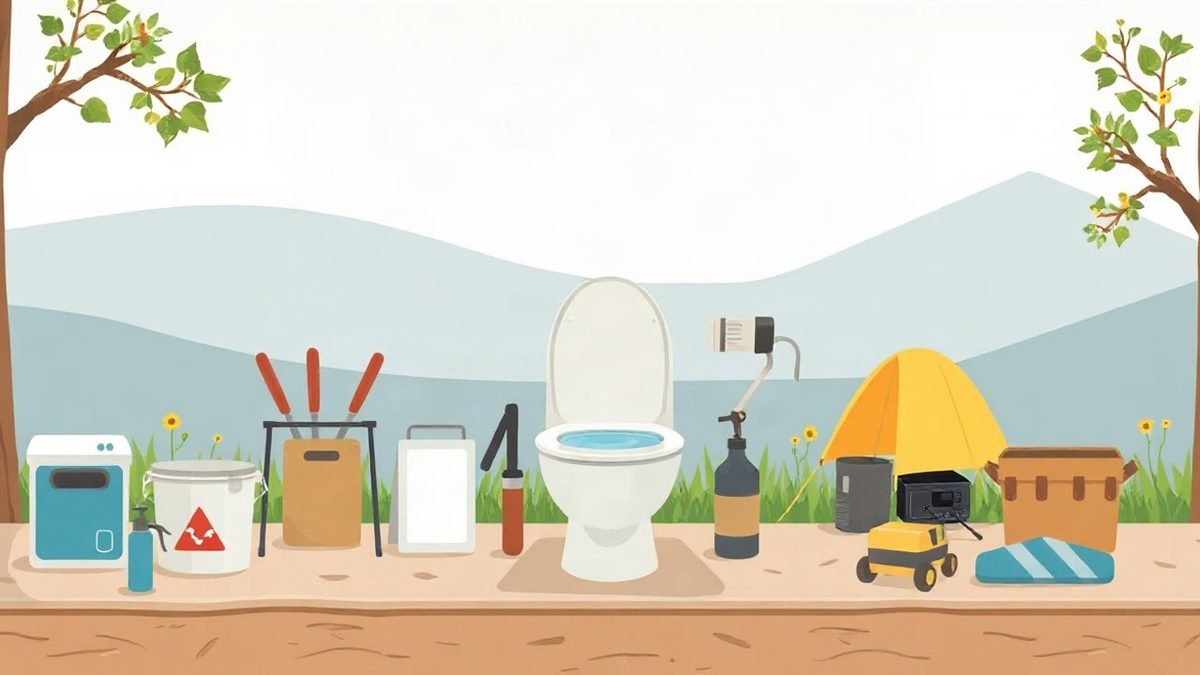
- Showers and personal washing. Usually the single largest use unless you have already gone navy-shower only.
- Kitchen use. Cooking, drinks and washing up.
- Toilet flushing. Unless you use a cassette or portable toilet that does not draw from the fresh tank, which is why many serious boondockers do exactly that.
- Cleaning and spills. Rinsing hands, wiping surfaces, washing pets or gear.
If you are still using your RV toilet on fresh water, switching to a portable or cassette toilet is one of the fastest ways to cut consumption. Our guide to choosing the best portable toilet covers the options and what each one costs you in water and maintenance.
Kitchen tactics that save litres every day
Cook with less water
One-pot meals, grilling and foil-packet cooking use far less water than boiling pasta or rice in excess. Measure the water you actually need rather than filling the pot, and steam vegetables above whatever you are already boiling instead of using a separate pan.
Wash up the efficient way
- Use a small basin rather than running water, and start with maybe two to three litres of hot water.
- Scrape plates clean before washing so the wash water lasts.
- Wash in the basin, then rinse with a brief spray or a second shallow basin rather than under a running tap.
- Save the final, cleanest rinse water for pre-soaking the next round of dishes.
Drinking water discipline
Keep a dedicated drinking jug or bottles so people pour what they need instead of running the tap until it is cold. Fill a bottle halfway with water, freeze it, then top it up: you get cold water all day and an ice block for the cooler without dumping any water down the drain.
Shower and hygiene habits for dry camping
The navy shower
Wet down, water off, lather, water on briefly to rinse. A typical RV shower head can flow at several litres per minute, so every minute you shave off matters. Cutting a shower from eight minutes to two, at a flow rate of several litres per minute, can save a substantial amount of water: at 6 litres per minute that is around 36 litres saved per person per day, so the arithmetic adds up quickly for two people.
Lower-flow hardware helps
A low-flow shower head or a shut-off valve on the shower hose is a cheap upgrade that enforces your good intentions. Some boondockers also install a aerator on the kitchen tap for the same reason.
Hygiene without a shower
On strict days, a bowl of warm water with a flannel handles face, hands and pits, and wet wipes handle the rest. Hand sanitiser can help when water is genuinely scarce, but it does not clean visibly soiled or greasy hands, so it is no substitute for washing when water is available. It is not glamorous, but it is how tank-life gets doubled.
Make water last longer in your RV: catch the waste
The most overlooked water in any rig is the water that goes down the drain before it is used. Water that runs while you wait for the shower to warm up, or while the tap “gets cold”, is perfectly good drinking water. Keep a jug or bucket by the shower and the sink, and decant that water into the kettle, the drinking jug or the pet bowl.
The same logic applies to pasta water and vegetable rinse water once it has cooled: it is fine for flushing a cassette toilet or extinguishing a campfire, though it should not be reused for drinking or washing up.
Greywater: reuse carefully, dispose properly
Sink and shower water can sometimes do a second job, such as putting out a fire ring or soaking very muddy ground, but greywater carries grease and soap residue, and dumping it on the ground is illegal or restricted in many places. Check the rules for your area and read our step-by-step guide on how to dispose of greywater when camping before you reuse anything.
Refilling strategy: know your water before you need it
Conservation only works if you know where the next fill is. Before any boondocking trip:
- Map your fill points. Rest stops, ranger stations, some fuel stations and campgrounds with potable water; confirm they are open and running.
- Carry a food-grade container. A jerry can or collapsible cube lets you top up from a tap that is not drive-up accessible.
- Fill on departure day. A full tank on day one means your budget starts clean.
- Treat unknown water. Filtering or treating water from uncertain sources turns a marginal fill into a usable one.
Rainwater catchment is another free option where it is legal and the weather cooperates: a tarp or roof gutter funnelled into a food-grade container can add meaningful litres during a wet spell. It is opportunistic, not reliable, so never plan a trip around it.
Is a DIY water generator worth considering? The Water Freedom System, honestly assessed
Some campers, particularly those who spend long stretches off grid or who want a backup supply for emergencies at home, look at atmospheric water generation: machines that condense moisture from ambient air, filter it and collect the output. The physics is real, and residential-scale units are sold commercially, but commercial machines are expensive, which is where DIY guides enter the picture.
The Water Freedom System is one such product. According to independent reviews, it is a downloadable digital construction guide, not a ready-made device or kit, that explains how to build an atmospheric water generator using components sourced separately from hardware and home-improvement stores. Buyers source the condenser, storage tank, filters, tubing and electrical parts themselves.
What the reviews say, in plain terms
- Reviewers on Backyard Freedom Lab note that atmospheric water generation is a legitimate technology and that the underlying physics of condensing moisture from air, filtering it and collecting the output is real; their concern is whether a low-cost DIY guide translates that into something practical, and under what conditions it actually works.
- Shelter Insider’s review concludes that the guide is built on real physics and that the refund policy keeps financial risk low, but also warns that the marketing is aggressive and the production claims reflect best-case conditions, specifically high ambient humidity.
- Everyrated scores the offer 2.6 out of 5 based on the quality of buyer-facing information it could document, and advises buyers to verify format, total price, billing terms, refund policy and support on the product page before purchasing.
Who it suits, and who it does not
Reviews of the guide, including the Backyard Freedom Lab review, suggest it is aimed at off-grid homesteaders, emergency preparedness planners and rural property owners evaluating a backup water source, though it will only suit you if you enjoy a DIY build project. It could suit a long-term boondocker with a base rig and storage space, or anyone setting up an emergency backup at a fixed property.
It does not suit everyone. A DIY atmospheric water generator needs power, space and humid air to produce meaningful amounts of water, so it is a poor fit for a small van in an arid desert, for anyone unwilling to source and assemble components, or for anyone expecting a plug-and-play solution. No seller claim about output should be taken as a promise: conditions vary enormously, and the honest position is that the technology works best in humid climates at best-case settings. If the idea interests you, you can check the current Water Freedom System details on the official offer page, confirm the price and refund terms for yourself, and treat it as one layer of redundancy alongside, never instead of, a full fresh tank.
For most readers, the free options in this article, tighter habits, a water budget, low-flow hardware and better refill planning, will stretch a tank further than any new device will.
Affiliate recommendation
Mentioned in this article: Water Freedom System: The 2026 Water Converter Breakthrough
Water Freedom System: The 2026 Water Converter Breakthrough is a guide that, according to the seller, explains how to build a device that collects water from the air.
Read the seller’s information →
Affiliate link: we may earn a commission if you purchase, at no extra cost to you. We have not tested this product.
FAQ
How long can you boondock on one tank of water?
It depends entirely on consumption. The duration depends entirely on your consumption rate: at a frugal 10 litres per day a 100-litre tank could theoretically last ten days, while a couple using 40 litres a day would empty it in two and a half. Work out litres per person per day and divide. Work out litres per person per day and divide.
What uses the most water when dry camping?
Showers are usually the biggest single use, followed by kitchen work and toilet flushing. Switching to short navy showers and a cassette or portable toilet removes the two largest drains on your fresh tank.
Can I reuse dishwater or shower water?
Cold, relatively clean rinse water can be reused for flushing a cassette toilet or soaking a fire area. Greasy wash water is not suitable for reuse on skin or dishes. Always check local rules before releasing greywater on the ground; many campgrounds prohibit it.
Do atmospheric water generators actually work?
Yes, the technology is real and commercial units are sold, but output depends strongly on humidity, temperature and power availability. DIY versions built from a guide will also perform best in humid conditions, and seller production claims generally describe best-case scenarios.
What can the Water Freedom System realistically do for boondockers?
According to reviews, it is a digital construction guide for building a DIY atmospheric water generator from separately sourced parts. It may interest campers with space, power and a build-it-yourself mindset who want experimental backup supply, but it is not a plug-and-play device and does not replace carrying and conserving water. Verify format, price and refund terms on the product page before buying.
Final thoughts
Making water last while boondocking is mostly arithmetic and habit: know your litres per person per day, target showers and the kitchen, capture the water you would otherwise waste, and plan your refills before you leave. Once those habits are in place, your tank should last noticeably longer, though the exact gain depends on how much you were using before. If you want to go further, start by calculating your daily needs with our daily needs calculator, then build your trip plan around that number.
Sources
- Water Freedom System: The 2026 Water Converter Breakthrough…
- Water Freedom System Review 2026: DIY Drinking Water From Air?
- Water Freedom System Review: Is It Worth Buying?
- Water Freedom System Review (2026): Is It Worth It? | Shelter Insider